First-time Purchase Discount

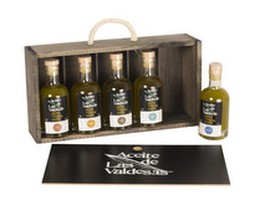
Sign up and get a 5% discount on the price of olive oil on your first order online.

Find out what our customers are saying about Valdesas oils.
The term pomace was formerly used to refer to the remains of the olives after the extraction of virgin olive oil.
Pomace was composed of the pulp, skin, and stones, together with water and a residual amount of olive oil, typically between 2% and 3%. Today, with the use of two-phase olive mills, the by-product obtained is called alperujo. It is a compact mass made up of the same components and contains a similar percentage of olive oil.
To extract this small amount of olive oil, chemical solvents are used, most commonly hexane. This process is carried out in pomace extraction plants.
Obviously, this is not virgin olive oil. It is known as crude olive-pomace oil.
Crude olive-pomace oil has the same fatty acid profile as oil extracted by physical processes. However, like lampante olive oil, it has a high level of acidity and undesirable aromas and flavours, making it unsuitable for consumption. It must therefore be refined.
Once crude olive-pomace oil has been refined using the same process applied to lampante olive oil, it becomes refined olive-pomace oil. Like refined olive oil, it has no flavour, aroma, or colour and is not suitable for direct consumption.
Finally, as with refined olive oil, refined olive-pomace oil is blended with virgin or extra virgin olive oil to provide flavour, colour, and aroma. This final product, which is suitable for consumption, is known as olive-pomace oil and can be found in shops and supermarkets.
Here you can learn about all the types of olive oil and their origin.