The Olive Harvest
The olive harvest marks the beginning of the olive oil production process. The olive grove has been carefully managed throughout the year in preparation for this important agricultural task. The quality of the final product will largely depend on proper planning, the timing of the harvest, the harvesting techniques and equipment used, the ripeness of the fruit, and, ultimately, the experience and knowledge of the workers involved. The main objective is to bring together all these factors in order to obtain the highest possible quantity of fruit while maintaining the highest quality standards.
What is the optimal period for olive harvesting?
As with other crops, olive harvesting requires a careful assessment of the factors that determine the optimal harvesting time. These factors include the type of plantation, olive variety, harvesting methods and techniques, and the stage of fruit ripeness. Regarding the fruit itself, olives gradually increase in size and, from a certain point onwards, begin to undergo changes in colour that indicate their stage of maturity. Several factors are taken into account when determining the ideal time for harvesting:
- Oil content in the fruit.
- Evolution of oil quality within the fruit.
- The olive tree’s resistance to the mechanical forces applied by harvesting machinery.
- The harvesting dates of the previous crop.
The oil content of the fruit increases as the olives mature. The maximum level is reached when the green olives have disappeared from the tree. The organoleptic characteristics of the fruit, and consequently of the oil obtained from it, gradually decrease as harvesting is delayed. The most fruity and aromatic oils are obtained at the beginning of the ripening process, even when a proportion of green olives is still present.
At Las Valdesas, we begin harvesting our olives between the end of October and the beginning of November. As we produce five different varieties of olive oil (Hojiblanca, Arbequina, Picual, Manzanilla, and Frantoio), we stagger the harvest according to the ideal ripening point of each variety. Our oils are early harvest oils, with the aim of producing highly fruity oils with outstanding culinary qualities while also achieving the highest possible concentration of polyphenols (compounds naturally present in olives with antioxidant and anti-inflammatory properties). Learn more about polyphenols in our oils.
What are the olive harvesting systems?
The use of different harvesting systems (with varying degrees of automation) depends on the level of technological development of the farm and the type of olive grove plantation. Olive groves can generally be classified as follows:
- Traditional planting: These are olive groves with a low density of trees per hectare (between 80 and 120), usually arranged in a square pattern with 10–12 metres between trees. Olive trees often have two or three main trunks to increase production.
- Intensive planting: These olive groves have a density of between 200 and 600 trees per hectare. They consist of single-trunk olive trees planted at spacings of 6 × 6 metres or 6 × 3 metres, with 6-metre working lanes. Harvesting in these plantations is usually carried out using tree shakers with catching umbrellas or mechanical shakers combined with rods and collection nets.
- Super-intensive planting: These plantations have a density of between 1,200 and 2,000 trees per hectare. In this type of olive grove, harvesting operations are fully mechanised.
The harvesting systems, ordered according to the traditional nature of the techniques used (from the most traditional to the most advanced), are as follows:
- Hand picking: The worker operates from the ground or uses ladders, running their hands along fruit-bearing branches and allowing the olives to fall onto nets previously spread beneath the trees. The cost of harvesting using this method is very high because it is a highly traditional and labour-intensive system with a low collection rate.
- Beating with poles: The worker uses a pole between one and four metres long to strike the olive branches, ensuring that the blows are applied sideways to the areas where the olives are located, avoiding damage to the tree, as this could affect the following year's production. As with the previous method, the olives fall onto nets placed beneath the trees and are then transferred to transport containers for delivery to the olive mill.
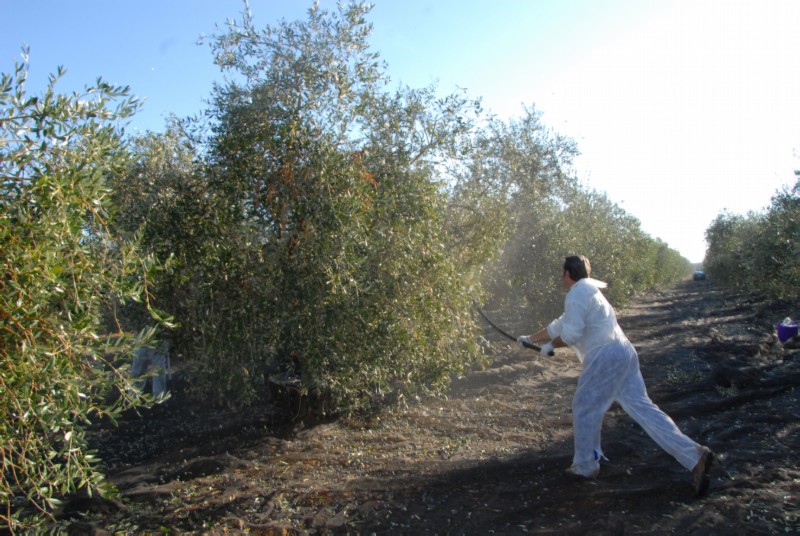
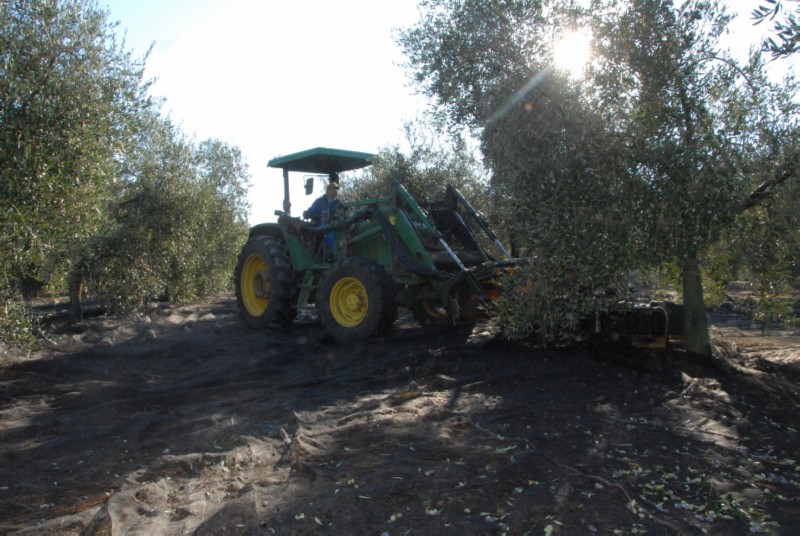
- Tree shaking: This technique consists of attaching a mechanical arm to a tractor or using a handheld device that shakes the tree or branches until the olives fall due to the vibration. The olives are collected on nets placed beneath the tree. When using a tractor-mounted shaker, the device is attached to the trunk of the olive tree; when operated manually, it is attached to the branches. The latest development in this type of harvesting is the use of machines known as “buggies”, which also work through vibration but offer greater manoeuvrability within the planting rows.
What are the stages of olive harvesting?
The olive harvesting process for olive oil production can be divided into the following stages:
- Soil preparation. This includes cleaning the area to facilitate the later collection of olives, as well as adapting the planting layout so that the rows are wide enough to allow harvesting machinery to move easily.
- Fruit collection. Olives can be harvested directly from the tree (“tree-harvested olives”) using one of the techniques described above, or collected from the ground after naturally falling from the tree as they mature. Naturally, olives collected from the ground are more mature than those harvested directly from the tree and, consequently, the quality of the oil obtained from them is lower.
- Transport. When olives are collected onto nets placed beneath the trees, it is essential to remove leaves, branches, and other plant debris both in the field and later at the olive mill. The time between harvesting the olives and milling them at the olive mill should be kept as short as possible, and the transport method used should minimise any possible damage to the fruit.