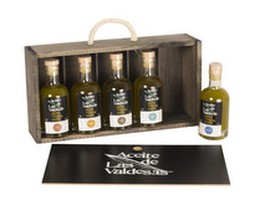
The colour of virgin olive oil
One of the biggest myths surrounding extra virgin olive oil is its colour, as many consumers consider colour to be an indicator of quality.
What colours can extra virgin olive oil have, and what determines them?
Extra virgin olive oils can range in colour from pale yellow to deep green, with a wide variety of shades in between, including orange hues. Their colour is determined by natural pigments, mainly chlorophyll (the green pigment) and carotenoids (the yellow-orange pigments), and depends primarily on the following factors:
- Stage of ripeness: At the beginning of the harvest, especially for early harvest olive oils, the olives are greener and have not yet completed the ripening process (known as veraison). At this stage, they contain higher levels of chlorophyll and pheophytins, which give the oil its intense green colour. As the olives ripen, the resulting oil becomes more yellow due to the increasing levels of carotenes and xanthophylls.
- Olive variety: For example, Picual olive oil is generally greener than Arbequina, Hojiblanca or Manzanilla olive oil. However, oil produced from green olives will always be greener than oil made from ripe olives, regardless of the olive variety.
- Filtered olive oil: During the filtration process, tiny particles of olive pulp and suspended water are removed. As these particles contain chlorophyll, filtration slightly reduces the intensity of the green colour.
- Storage conditions: Over time, olive oil gradually loses its green colour. Exposure to light and high temperatures accelerates this process, causing the oil to change from green to yellow as chlorophyll (bright green) breaks down into pheophytin (a dull green pigment with brownish tones).
Is the colour of extra virgin olive oil an indicator of quality? Quality vs Colour
- The criteria used to assess extra virgin olive oil are not related to its colour. In fact, colour is deliberately excluded from professional sensory evaluation. Olive oil is tasted using blue or dark red tasting glasses that prevent the colour of the oil from being seen, ensuring that the assessment is based solely on aroma and flavour.
- Extra virgin olive oils with green hues are generally fresher and tend to display more herbaceous notes, whereas yellow oils are often milder, sweeter and smoother on the palate.
- If the oil has a reddish or dark brown colour (similar to cognac), it may indicate that the oil has deteriorated. If it also has an unpleasant taste and a strong smell resembling paint or solvent, the oil is rancid.
- Olive oils with a very pale yellow colour (or that appear almost transparent) may indicate a blend of virgin olive oils with refined olive oils. This product is marketed simply as olive oil and generally has very little flavour, aroma or the health benefits associated with extra virgin olive oil.