First-time Purchase Discount

Sign up and get a 5% discount on the price of olive oil on your first order online.

Find out what our customers are saying about Valdesas oils.
Olive oil acidity is a topic that is as widespread as it is misunderstood by consumers and even by cooks. In this article, we will try to clarify some common misconceptions.
Contents
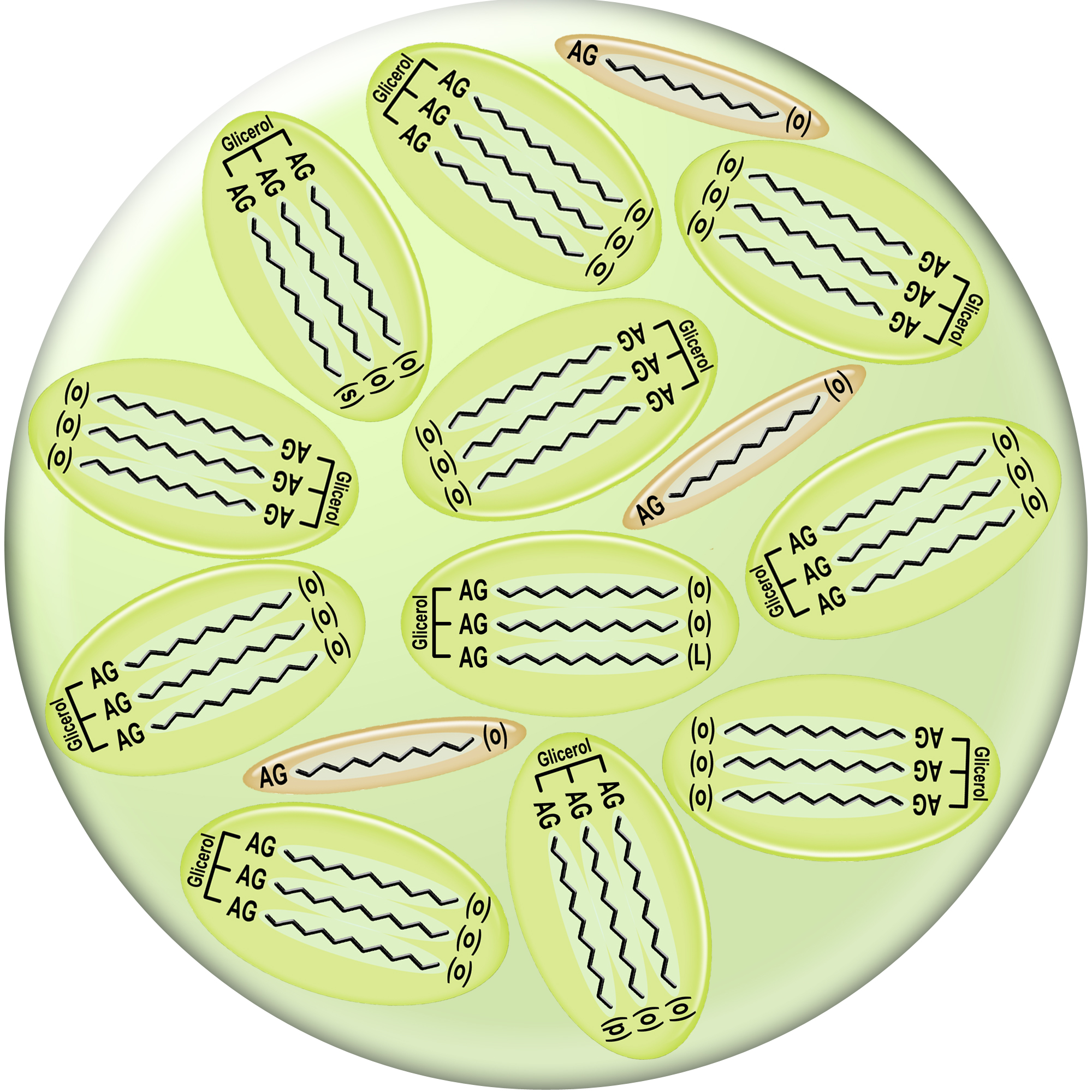
Olive oil is naturally formed within the olive fruit in the form of triglycerides. Each triglyceride is made up of three fatty acids linked to a molecule called glycerol.
The bond between glycerol and the three fatty acids is weak, so when exposed to aggressive or oxidising conditions, it breaks and releases the three fatty acids. As a result, the olive oil begins to deteriorate. Acidity measures the amount of these free fatty acids present in the olive oil; therefore, acidity is a general indicator of the quality of virgin olive oils.
Acidity, the parameter shown on bottle labels, measures the amount of free oleic acid, the most abundant fatty acid in olive oil. Acidity is expressed as the percentage by weight of free oleic acid in the total amount of olive oil. On labels it should be expressed as a percentage (%), but for reasons that are unclear, it has traditionally been expressed in degrees (°).
Among consumers there is considerable confusion about olive oil acidity. Almost everybody tends to confuse it with the intensity of the oil's flavour, regardless of whether those flavours are pleasant or unpleasant. In fact, free fatty acids have no taste. We believe this confusion is due to two reasons:
1.- People confuse acidity with one of the basic tastes: sweet, salty, sour and bitter. In reality, they are not related, and acidity, as a quality parameter, cannot be detected by tasting.
2.- Although acidity is a quality parameter that applies only to Virgin Olive Oils, in the past the industry used it on the labels of 'olive oils', which are blends of refined olive oil and virgin olive oil. Therefore, the higher the proportion of refined oil in an olive oil, the lower its acidity and flavour, since refined olive oils have neither flavour nor acidity.
The acidity level is one of the main parameters used to classify the quality of the different types of virgin olive oil:
Extra virgin olive oil: Its acidity must be less than or equal to 0.8º.
Virgin olive oil: Its acidity must be less than or equal to 2º.
All virgin olive oils with an acidity above 2º are classified as lampante olive oils.
At the end of each harvest, we analyse the acidity of our olive oils.
Our Arbequina, Picual and Hojiblanca olive oils usually have an acidity below 0.20º. (The lowest acidity we have ever recorded is 0.14º.)
Our Frantoio and Manzanillo olive oils usually have an acidity between 0.4º and 0.6º, all well below the extra virgin limit of 0.8º.
You can see the acidity of our olive oils on the analysis page.
Some years ago, the acidity level was used as the main quality claim on the labels of olive oils, although not on virgin olive oils.
Since acidity caused confusion among consumers and did not necessarily reflect the quality of olive oils, the legislation changed. Today, if a producer wishes to include the acidity of an olive oil on the label, they must also include other quality parameters such as peroxide value, wax content and ultraviolet absorbance (K270, K232 and ΔK).
This did not encourage producers to include these additional quality parameters. Instead, they removed acidity from the labels and replaced it first with generic figures such as 0.4 and 1, and later with the terms "intense" and "mild".
Only high-quality extra virgin olive oils usually include the acidity level on the label, together with other quality parameters such as peroxide value, wax content and ultraviolet absorbance.
As we have seen, the acidity of an olive oil increases as it is exposed to oxygen and other aggressive conditions. We are now going to see how triglycerides, the main component of olive oil, can be broken down throughout the life of the olive oil.
1.- Olive oil inside the olive fruit.
At first, triglycerides are protected inside the olive fruit from atmospheric oxygen by the skin of the fruit. If the skin is damaged, oxygen enters the fruit and begins to break down the triglycerides, causing the acidity to increase. The skin can be damaged for many reasons: pest attacks, hail, fruit falling to the ground, damage during transport, etc. In conclusion, olive oil obtained from healthy olives, free from pest damage and harvested directly from the tree, will have a low acidity.
Another critical stage is the storage of the olives before milling. When the olives arrive at the mill, they are unloaded into metal hoppers. The olives at the bottom are crushed by the weight of those above them, allowing oxygen to start the oxidation process. If the olives remain in these hoppers for a long time before milling, the acidity increases significantly and fermentation may even begin. This problem becomes more pronounced as the olives ripen, since riper olives are softer and more easily crushed.
2.- The milling and production process.
During the production process at the mill, the olive paste comes into contact with the air and is therefore exposed to oxidation. The longer the milling process lasts, the more the olive paste will oxidise. Temperature is also important. The higher the temperature, the faster the oxidation reactions occur and, consequently, the acidity increases. (More about olive oil production).
3.- Storage in the olive oil cellar.
Once the olive oil has been produced and stored in the cellar, oxidation can continue. If the storage tanks are not airtight, or even if they are airtight but not completely full, air remains inside the tank. Some mills replace this air with nitrogen to preserve the olive oil in perfect condition.