First-time Purchase Discount

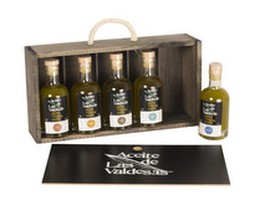
Sign up and get a 5% discount on the price of olive oil on your first order online.

Find out what our customers are saying about Valdesas oils.
The healthiest olive oils are virgin olive oils, as they retain all the beneficial compounds found in olive juice.
However, among virgin olive oils, which are the healthiest?
To answer this, we need to know which compounds in olive oil provide health benefits.
The European Food Safety Authority (EFSA) has determined that three compounds in olive oil have clear and specific beneficial effects on our health:
We will focus on the first two, as the third is less relevant since it can be found in many other foods.
Oleic acid is the main component of olive oil, making up between 61% and 83% of its weight. According to the EFSA, oleic acid “helps maintain normal blood cholesterol levels.” Specifically, it helps raise levels of good cholesterol (HDL) and reduce levels of bad cholesterol (LDL).
Therefore, the higher the percentage of oleic acid in olive oil, the healthier it is.
According to the EFSA, the polyphenols in olive oil “contribute to the protection of blood lipids from oxidative damage.” In other words, polyphenols protect bad cholesterol (LDL) from oxidation. This oxidation process is one of the stages of atherosclerosis. (Learn more about olive oil, cholesterol, and atherosclerosis.)
The EFSA states that this beneficial effect occurs when consuming olive oil with a polyphenol concentration of more than 250 mg/kg, through a regular daily intake of at least 20 grams (about one and a half tablespoons).
Therefore, the higher the polyphenol content, the healthier the olive oil.
Based on the above, if we want to consume olive oil for health reasons, we should look for virgin olive oil with high levels of oleic acid and a rich content of polyphenols.
This is not always easy, as this information is often not included on the label.
The amount of oleic acid in an olive oil mainly depends on the olive variety used to produce it.
In general, the following table shows different olive varieties and their oleic acid content.
| Olive Variety | % Oleic Acid |
|---|---|
| Picual | 76 |
| Cornicabra | 77 |
| Hojiblanca | 74 |
| Frantoio | 67 |
| Manzanilla | 72 |
| Arbequina | 65 |
Oleic acid content by olive variety.
The only clear indication a consumer has of the polyphenol content of an oil is if the label states that: ‘Olive oil helps protect blood lipids against oxidative damage’. If this is stated, the consumer can be sure that the polyphenol content is at least 250 mg/kg.
The problem is that producers do not usually include this statement; some because their oils do not meet the minimum level required to include it, and others because they cannot guarantee that the polyphenol content will remain above 250 mg/kg until the best-before date, as in most cases they cannot control storage conditions during distribution and at points of sale.
As an alternative, consumers can choose to buy early-harvest extra virgin olive oils that are labelled as being from the latest olive harvest.
At the Las Valdesas estate, we produce single-variety extra virgin olive oils: Picual, Hojiblanca, Arbequina, Frantoio and Manzanilla.
With every harvest, we provide the polyphenol analysis for each variety of oil, so that consumers have clear information.
Thus, by knowing the variety and the polyphenol analysis, you can determine which oils are the healthiest.
At present, the two benefits we have outlined here are the only ones that have been conclusively and unequivocally proven to have a preventive effect on the general population. Both are linked to the protection of the cardiovascular system through two clear mechanisms: the reduction of ‘bad’ cholesterol and protection against oxidation.
Studies into these and other components of olive oil, which are involved in other health-promoting mechanisms, are at various stages of verification.