First-time Purchase Discount

.
Why are there sediments at the bottom of the bottles? Is the Olive Oil spoiled?
Tips for frying with olive oil
What Are the Benefits of Frying with Olive Oil?
What is olive oil acidity and what does it mean?
What is the best way to store Extra Virgin Olive Oil?
Does olive oil expire?
"First cold extracted" vs "First cold pressed" olive oil: What's the difference?
What is cold-extracted olive oil?
What are Single-Variety Extra Virgin Olive Oils ?
Can olive oil be used in baking?
Filtered vs Unfiltered Olive Oil: What Is the Difference?
What is the difference between Virgin Olive Oil and Extra Virgin Olive Oil?
Mild-Flavored Extra Virgin Olive Oil
Bitter olive oils
Where to buy Extra Virgin Olive Oil?
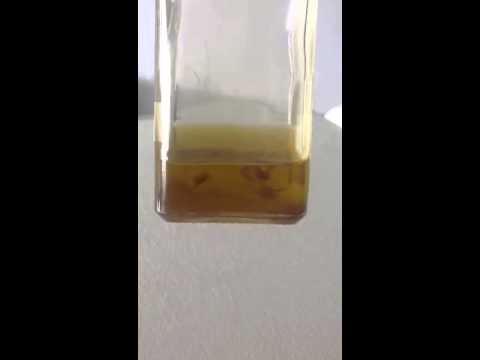
Las Valdesas olive oils are unfiltered, so they contain small suspended solid remains from the fruit of the olive.
After a period of time,moths, these solids will settle down in a natural way to be deposited in the bottom of the packaging.
These sediments are completely normal in unfiltered Extra Virgin Olive Oils and they are not indicative, in any case, that the olive oils are damaged. If you do not want to have these remains in your product, simply filter them with a strainer.
In exceptional situations in which bottled olive oil is very fresh (just milled), i.e. just freshly produced, they may appear such as gum remains with rubbery appearance in the bottom of the packagings. These are unions of waxes, gums and phospholipids present naturally in olive oil. Like the described solids in suspension, they are not indicative of a bad quality or irregular conservation of the olive oils, and they can be filtered and removed easily also with a strainer.
A completely different phenomenon to the described above, and extended to all the extra virgin olive oils, filtered and unfiltered, is what happens with the olive oils in cold weather conditions. At low temperatures, between 23 and 5.5 ºC, the fatty acids of the olive oils begin to solidify, adopting a whitish color and waxy appearance. This same phenomenon can be seen in cans that contain olive oil when they are in the refrigerator. Some customers of northern Europe have got in touch with us to explain if it was normal or not. (They tell us there is white stuff in olive oil)
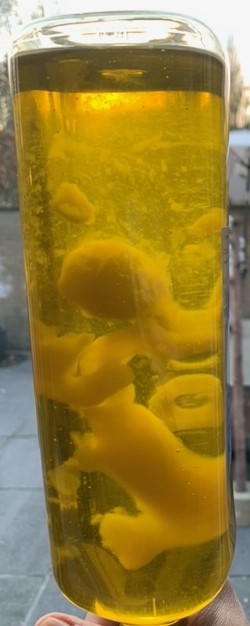
Obviously these 'sediments' are not such, and they do not have any effect on the quality of the olive oil. They disappear simply when the temperature raises.
Read moreFrying is the process of cooking food by immersing it in hot olive oil. The temperature should be slightly higher than the boiling point of water, between 130 and 190 °C.
The aim is that, when the food is placed in the hot oil, a crust forms around it, preventing the oil from penetrating the food. The food is then cooked in its own water content. The result should be food that is golden and crispy on the outside and cooked on the inside, without being saturated with oil.
Olive oil should not exceed 200 °C, as at this temperature the fatty acids begin to break down. In other words, the oil starts to smoke and burn.
The temperature of the olive oil should remain steady during frying. It is important to ensure that the temperature does not drop too much when the food is added. For this reason, it is advisable to bring the food to room temperature before slowly placing it in the hot olive oil.
The frying temperature depends on the water content of the food and the size of the pieces. The higher the water content, the longer the food needs to be fried and the lower the temperature should be, allowing enough time for the inside to cook without burning the surface. For example, chips require more cooking time because of their high water content, so it is recommended that they are fried at 130-150 ºC. Fried fish and croquettes require less time and can be fried at 180 ºC.
It is important to add food that is as dry as possible, because water promotes the decomposition and oxidation of the oil, as well as causing splashing. It is therefore important that the olive oil is hot when the food is added, so that the water evaporates quickly. It is also important to fry food without covering the frying pan, so that water vapour does not condense and return to the olive oil.
After using the oil for frying, it is advisable to filter it. The particles left in the olive oil accelerate its decomposition.
You should not mix used oil with new oil. It is also advisable to use one batch of olive oil for frying fish and another for general use.
By following the above recommendations for storing and maintaining the oil, you can use olive oil for 4 or 5 frying cycles, according to the International Olive Council.
You can tell that olive oil has deteriorated when it develops a dark colour, an unpleasant or unusual smell, or begins to produce foam. However, even if none of these signs are present, you should not exceed the number of frying cycles recommended above.
The electric fryer has the great advantage of being very convenient to use, as it has a thermostat that allows you to regulate the frying temperature. From our point of view, however, this is its only real advantage.
With a frying pan, you can use the amount of oil appropriate for the food you are frying. Although it does not have a thermostat, using a frying pan allows you to control the amount of oil more easily.
The main disadvantage of electric fryers is that they require a large quantity of olive oil. In general, they have a capacity of two or three litres or more. If we want to prepare fried food properly, we need to use a large amount of oil, which can then be reused 4 or 5 times. This is why we believe that using an electric fryer is less economical than using a frying pan. In addition, the electric fryer needs to be cleaned every time the oil is changed.
Think of the greasy smell you sometimes notice in establishments with large electric fryers that use sunflower oil, which is generally considered suitable for only 1 or 2 frying cycles because it deteriorates more quickly than olive oil. We think it is very unlikely that this oil is actually changed that frequently, as doing so would be completely uneconomical.
Read moreOlive oil is one of the most stable vegetable oils within the temperature range commonly used for frying.
There are two main reasons for this. The first is its high concentration of oleic acid, a monounsaturated fatty acid that is more stable at high temperatures than polyunsaturated fatty acids, which are predominant in many seed oils, such as sunflower oil. The second is the presence of polyphenols, which are natural antioxidants found in olive oil that help slow down its degradation during heating.
Its stability allows frying at temperatures of up to 180 ºC, which promotes the rapid formation of a crust that helps prevent oil from penetrating the food. This results in lighter and more appetising fried food, with less oil absorbed and a lower overall oil consumption.
This same stability also means that, when olive oil is used correctly for frying, it can be reused several times, potentially more often than many seed oils, which can help reduce the cost of frying.
Finally, olive oil has a relatively high coefficient of expansion, meaning that it expands as it heats up in the frying pan. As a result, you can fry a larger amount of food using the same quantity of oil. By contrast, some components of seed oils, such as sunflower oil, may evaporate during frying, reducing the amount of oil available.
Among the different olive oil varieties, Picual olive oil is particularly suitable for frying because it naturally contains high levels of oleic acid and polyphenols, the natural antioxidants that help protect the oil against oxidation.
Some people believe that frying with Extra Virgin Olive Oil (EVOO) is a waste because of its higher price compared with other oils commonly used for frying.
In our opinion, in addition to the benefits mentioned above when comparing regular olive oil with seed oils, Extra Virgin Olive Oil offers a couple of additional advantages.
Firstly, Extra Virgin Olive Oil adds more flavour to food during frying. As a result, you may find that you need less salt or sauce to enhance the flavour of the finished dish.
Secondly, Extra Virgin Olive Oil contains, on average, five times more polyphenols than regular olive oil, which contributes to its greater stability during frying.
Read moreOlive oil acidity is a topic that is as widespread as it is misunderstood by consumers and even by cooks. In this article, we will try to clarify some common misconceptions.
Contents
Olive oil is naturally formed within the olive fruit in the form of triglycerides. Each triglyceride is made up of three fatty acids linked to a molecule called glycerol.
The bond between glycerol and the three fatty acids is weak, so when exposed to aggressive or oxidising conditions, it breaks and releases the three fatty acids. As a result, the olive oil begins to deteriorate. Acidity measures the amount of these free fatty acids present in the olive oil; therefore, acidity is a general indicator of the quality of virgin olive oils.
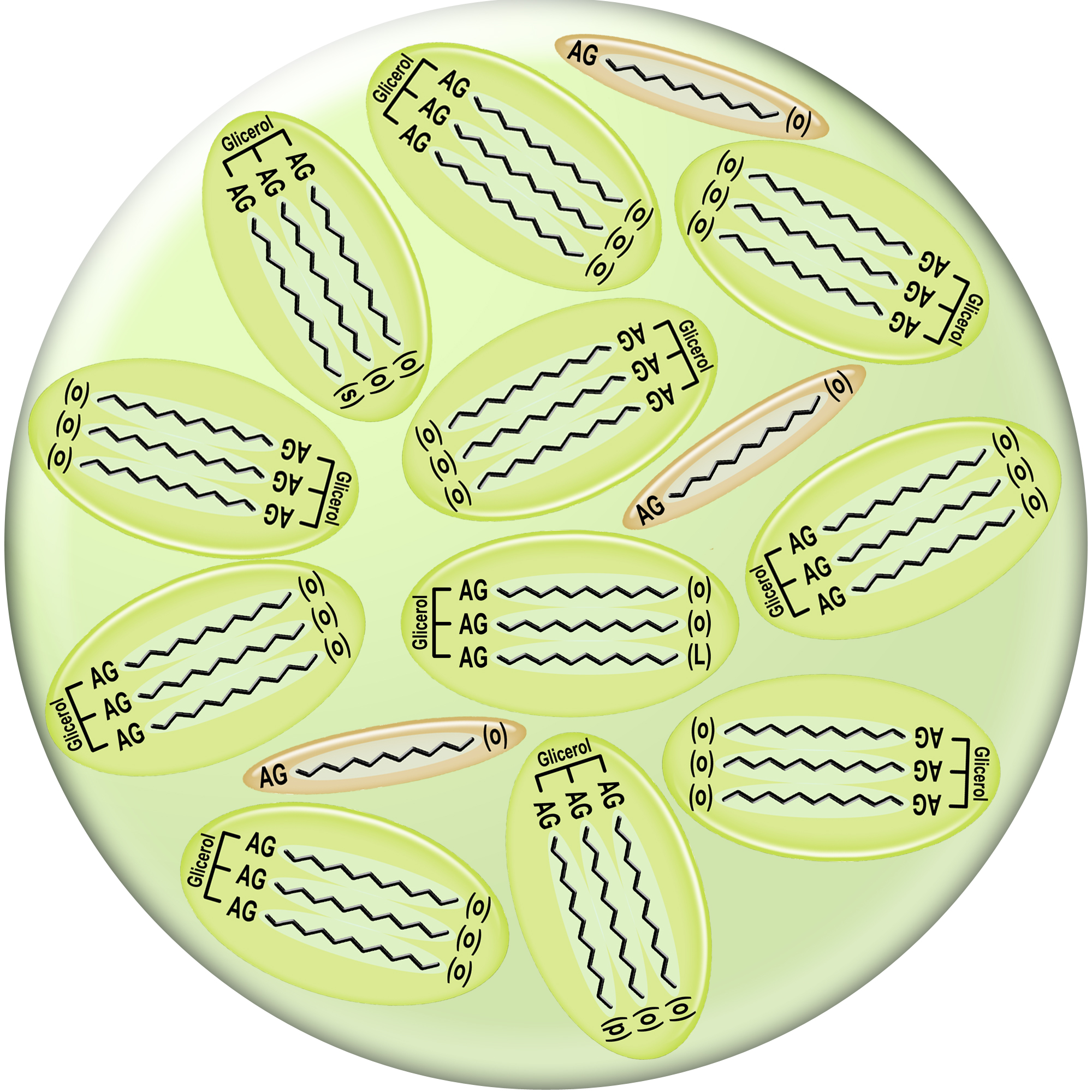
Acidity, the parameter shown on bottle labels, measures the amount of free oleic acid, the most abundant fatty acid in olive oil. Acidity is expressed as the percentage by weight of free oleic acid in the total amount of olive oil. On labels it should be expressed as a percentage (%), but for reasons that are unclear, it has traditionally been expressed in degrees (°).
Among consumers there is considerable confusion about olive oil acidity. Almost everybody tends to confuse it with the intensity of the oil's flavour, regardless of whether those flavours are pleasant or unpleasant. In fact, free fatty acids have no taste. We believe this confusion is due to two reasons:
1.- People confuse acidity with one of the basic tastes: sweet, salty, sour and bitter. In reality, they are not related, and acidity, as a quality parameter, cannot be detected by tasting.
2.- Although acidity is a quality parameter that applies only to Virgin Olive Oils, in the past the industry used it on the labels of 'olive oils', which are blends of refined olive oil and virgin olive oil. Therefore, the higher the proportion of refined oil in an olive oil, the lower its acidity and flavour, since refined olive oils have neither flavour nor acidity.
The acidity level is one of the main parameters used to classify the quality of the different types of virgin olive oil:
Extra virgin olive oil: Its acidity must be less than or equal to 0.8º.
Virgin olive oil: Its acidity must be less than or equal to 2º.
All virgin olive oils with an acidity above 2º are classified as lampante olive oils.
At the end of each harvest, we analyse the acidity of our olive oils.
Our Arbequina, Picual and Hojiblanca olive oils usually have an acidity below 0.20º. (The lowest acidity we have ever recorded is 0.14º.)
Our Frantoio and Manzanillo olive oils usually have an acidity between 0.4º and 0.6º, all well below the extra virgin limit of 0.8º.
You can see the acidity of our olive oils on the analysis page.
Some years ago, the acidity level was used as the main quality claim on the labels of olive oils, although not on virgin olive oils.
Since acidity caused confusion among consumers and did not necessarily reflect the quality of olive oils, the legislation changed. Today, if a producer wishes to include the acidity of an olive oil on the label, they must also include other quality parameters such as peroxide value, wax content and ultraviolet absorbance (K270, K232 and ΔK).
This did not encourage producers to include these additional quality parameters. Instead, they removed acidity from the labels and replaced it first with generic figures such as 0.4 and 1, and later with the terms "intense" and "mild".
Only high-quality extra virgin olive oils usually include the acidity level on the label, together with other quality parameters such as peroxide value, wax content and ultraviolet absorbance.
As we have seen, the acidity of an olive oil increases as it is exposed to oxygen and other aggressive conditions. We are now going to see how triglycerides, the main component of olive oil, can be broken down throughout the life of the olive oil.
1.- Olive oil inside the olive fruit.
At first, triglycerides are protected inside the olive fruit from atmospheric oxygen by the skin of the fruit. If the skin is damaged, oxygen enters the fruit and begins to break down the triglycerides, causing the acidity to increase. The skin can be damaged for many reasons: pest attacks, hail, fruit falling to the ground, damage during transport, etc. In conclusion, olive oil obtained from healthy olives, free from pest damage and harvested directly from the tree, will have a low acidity.
Another critical stage is the storage of the olives before milling. When the olives arrive at the mill, they are unloaded into metal hoppers. The olives at the bottom are crushed by the weight of those above them, allowing oxygen to start the oxidation process. If the olives remain in these hoppers for a long time before milling, the acidity increases significantly and fermentation may even begin. This problem becomes more pronounced as the olives ripen, since riper olives are softer and more easily crushed.
2.- The milling and production process.
During the production process at the mill, the olive paste comes into contact with the air and is therefore exposed to oxidation. The longer the milling process lasts, the more the olive paste will oxidise. Temperature is also important. The higher the temperature, the faster the oxidation reactions occur and, consequently, the acidity increases. (More about olive oil production).
3.- Storage in the olive oil cellar.
Once the olive oil has been produced and stored in the cellar, oxidation can continue. If the storage tanks are not airtight, or even if they are airtight but not completely full, air remains inside the tank. Some mills replace this air with nitrogen to preserve the olive oil in perfect condition.
Read more
Extra Virgin Olive Oil is a fruit juice. Its flavour and properties gradually deteriorate over time. This is a process in which the product loses some of its properties or, more technically, becomes oxidised.
In the absence of oxygen, olive oil is very well preserved and has traditionally been used as a preservative for tinned meat and fish. When exposed to air, olive oil can develop rancid flavours. In general, however, rancid olive oil is not harmful to health; it simply becomes unpleasant to taste. This is why olive oil carries a best-before date rather than a use-by date.
Another consequence of rancidity is that the polyphenols, which are antioxidant compounds found in Extra Virgin Olive Oil, gradually decrease. As a result, the health benefits associated with these substances also diminish.
Rancidity is an oxidative process and therefore requires oxygen. Light and high temperatures are the other main enemies of olive oil, as they accelerate the oxidation process.
Tips:
- Keep the olive oil in a dark place, such as a pantry or inside the cardboard boxes used for PET bottles.
- Once you have opened the bottle, close the cap tightly after each use.
- Keep the olive oil in a cool place.
- Keep the oil away from strong odours. Olive oil readily absorbs other flavours, which is one of the reasons it is so useful for preparing sauces and stir-fries. However, during storage, it can also absorb undesirable flavours.
- For regular use, especially for drizzling over food or dressing salads, use small oil cans. This way, the oil is exposed to air for less time and is less likely to become rancid. Simply refill the oil can from the main bottle as needed.
- To better preserve olive oil that has already been used for frying, you can follow these tips.
Olive oil is a completely natural product that does not expire in any of its varieties or types. It has a best-before date, which is something quite different, as we will explain below.
Olive oil producers are required to indicate a best-before date on the label, in accordance with Spanish legislation (R. D. 1334/1999, which approves the general standard for the labelling, presentation and advertising of food products and states in Article 11 that "every product must include a minimum durability date or an expiration date"). This best-before date is usually between 12 and 24 months, depending on several factors.
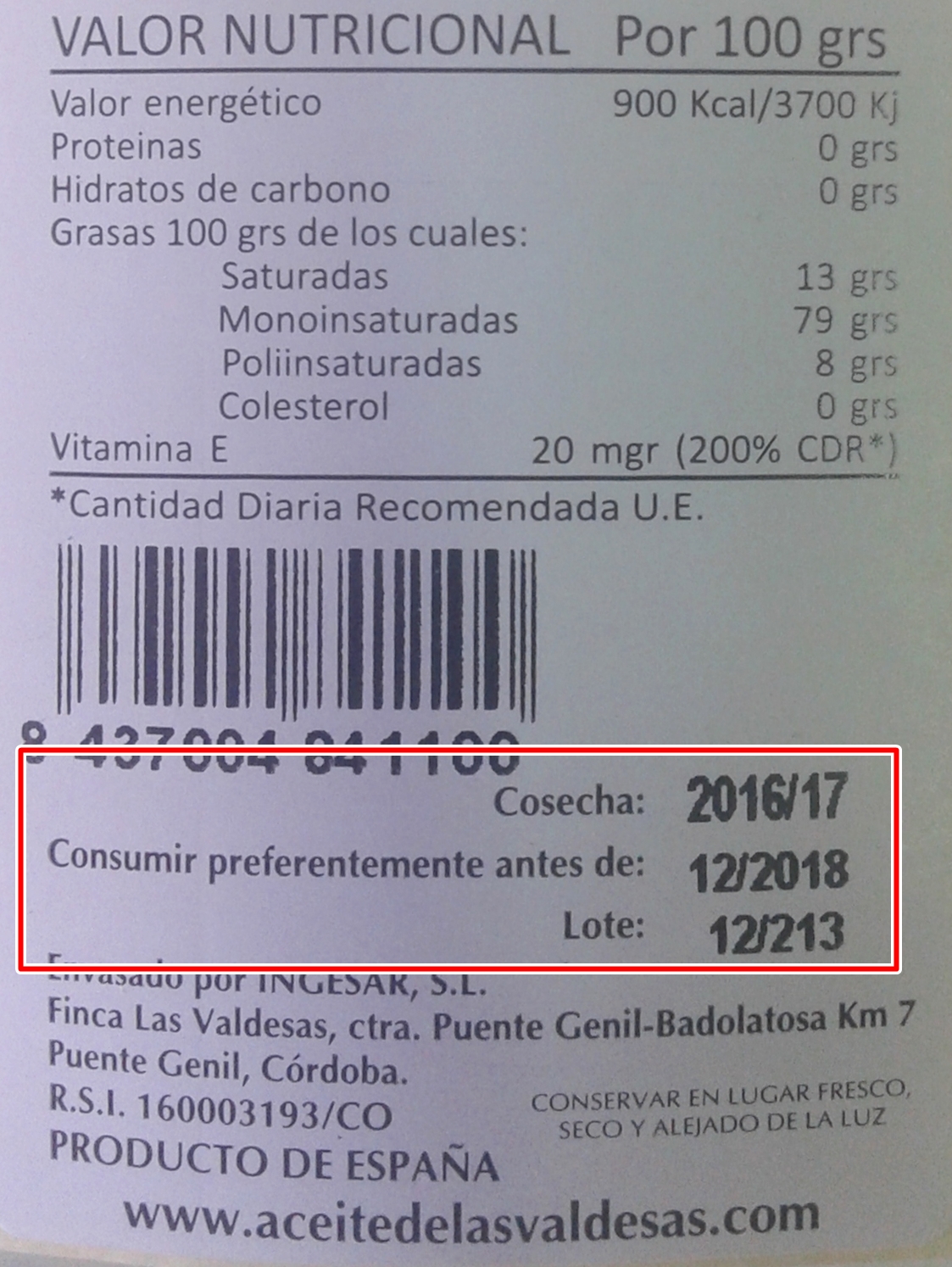
It is important to clarify that consuming olive oil after this date does not pose any health risk, as we are referring to a best-before date, not a use-by date. These are two very different concepts and are not always correctly understood.
Although the media are placing increasing emphasis on this issue, and our society is becoming more aware of the quality, origin and production methods of the products we consume every day, we do not always pay the necessary attention to these details. However, when it comes to a best-before date, passing this date does not mean that the product suddenly becomes unsafe to consume.
A use-by date means that, after the date shown on the product label, the food is no longer considered suitable for consumption and should be discarded. Consuming food after a use-by date may pose a health risk. The product can be consumed up to and including the date shown on the label or packaging, but not after it. In addition to the use-by date, producers must provide basic instructions on the appropriate storage conditions. As mentioned above, olive oil does not have a use-by date.
The best-before date is the date until which the producer guarantees that the product will retain its qualities and properties, provided it is stored under the appropriate conditions, both in the shop and at home. The main difference from a use-by date is that the product can still be consumed after the best-before date has passed without this necessarily posing a health risk, although its quality may gradually decline.
For olive oils, the best-before date is usually between one and a half and two years, although their shelf life depends on several factors, such as transport, proper storage both in the shop and at home, the type of packaging and the variety of olive oil. (Click for Olive oil storage).
The shelf life of a food product cannot be determined mathematically. To ensure better preservation, we must consider not only the production and processing methods, but also each and every one of the factors mentioned above.
It is the producers or packing companies who, following strict food safety and quality criteria, are responsible for establishing the best-before dates of food products in general and olive oils in particular. The storage conditions recommended on the packaging should always be followed. Olive oils should be kept in a cool, dry place, at between 18 and 20 ºC, away from light and protected from strong smells. A suitable best-before date is established with appropriate safety margins, and customers are always advised to consume the oil before the indicated date so that they can enjoy all the flavours, nuances and aromas of the product at their best. Passing the best-before date does not mean that the olive oil is no longer suitable for consumption.
Not all olive oils have the same shelf life. Producers must bear in mind that the shelf life of an olive oil depends on factors beyond proper storage, as explained in the previous section. These factors include:
• Harvest: As olive oil is a completely natural product, an olive juice that contains no preservatives or stabilisers, its freshness and shelf life are influenced by the harvest or crop year from which it comes. Although it is not legally compulsory to indicate the harvest or crop year on the label, at Las Valdesas we state it explicitly so that customers know they are consuming fresh olive oil with a clearly identified harvest.
• Oil type: Extra Virgin Olive Oil has greater stability due to its high antioxidant content, meaning that it generally remains in better condition up to its best-before date than other olive oils, such as olive pomace oil, olive oil or Virgin Olive Oil.
• Oil variety: Some varieties of Extra Virgin Olive Oil keep better than others. For example, Picual, due to its high content of antioxidants, oleic acid and polyphenols, retains its aromas and flavours for longer than more delicate varieties such as Arbequina. This does not mean that one olive oil variety is better than another, but its particular characteristics should be taken into account when considering its storage and recommended consumption period.
• Type of packaging: Any container currently marketed that complies with the regulations for olive oil packaging is perfectly suitable. However, depending on how long you intend to store the oil, some types of packaging may be better suited than others. If you want to keep olive oil for a long period and in the best possible condition, we recommend storing it in tins or dark glass bottles. If, on the other hand, you intend to consume it soon and want to purchase it at a lower price, PET bottles are a suitable option, provided they are stored correctly, away from high temperatures and protected from both natural and artificial light.
Read moreEvery day we receive enquiries from customers about cold-pressed oils, more specifically about "first cold-pressed" oils. Today, this term is no longer entirely accurate. We will explain why below.
Nowadays, oils obtained by pressing are rarely marketed, not only for reasons of profitability, but also for reasons of hygiene and food safety.
Interestingly, the idea has become widespread that "pressed oil" is a high-quality olive oil, when in fact this process has been replaced by more advanced extraction methods that produce oils of higher quality and with better characteristics.
Below, we explain the difference between cold-"pressed" olive oils and the oils that most people are actually referring to when they ask about them: cold-"extracted" olive oils.
Traditionally, olive oil was obtained using presses, consisting of a central axis around which stacks of pressing mats were placed. These mats were originally made from esparto grass and later from synthetic fibres. The olive paste, produced after crushing and grinding the olives, was spread onto these mats.
Finally, the stack of mats was closed with a metal plate, and pressure was applied directly. This caused the olive paste to release a liquid consisting of a mixture of oil and vegetation water.
If the oil was produced without heating the olive paste, it was known as "cold-pressed" oil (the paste must not exceed 27 °C).
Olive paste is heated because heat facilitates oil extraction by reducing its viscosity. However, this also causes the oil to lose aroma and flavour, as the volatile compounds responsible for these characteristics evaporate.
The mixture was then transferred to tanks where it was left to settle naturally, allowing the oil to remain on the surface while the vegetation water settled below, making it possible to collect the oil from the top. This traditional method has several drawbacks when producing a high-quality Extra Virgin Olive Oil:
For the reasons mentioned above, this production method has been discontinued for economic, quality and hygiene reasons. The modernisation of olive mills and the use of centrifuges have made it possible to produce higher-quality oils with better characteristics than those obtained through pressing.
The olive oil obtained using the procedure described above is known as first cold-pressed oil. It is extracted from freshly crushed olive paste without any previous pressing, using completely clean or newly replaced equipment (press and mats). The olive paste is pressed only once; the remaining paste is either discarded or pressed again. In the latter case, it can no longer be described as first cold-pressed.
Obviously, during the second or third pressing, the oil obtained is of much lower quality, because while waiting for the next pressing, the olive paste oxidises, the vegetation water begins to ferment and, because it remains in contact with the oil, transfers undesirable odours and flavours (known in Spanish as alpechín or alpechinera).
This is the standard method used today in the production of olive oil, where centrifuges are used to extract the oil. If the extraction takes place at a temperature below 27 °C, the oil is known as cold-extracted olive oil, ensuring the highest quality from a gastronomic and organoleptic point of view while preserving all its properties and health benefits.
To obtain more oil (higher yield) from the olives, some producers increase the extraction temperature beyond the limit mentioned above, obtaining more oil per kilogram of olives and a greater volume of oil for sale. However, this oil inevitably loses part of its nutritional and organoleptic qualities.
All our Extra Virgin Olive Oil varieties are produced by first cold extraction. In accordance with strict quality standards, the crushed olive paste passes through the centrifuge only once. The remaining olive paste is then reused through composting as fertiliser for our olive groves.
In this way, we guarantee that you will enjoy an olive oil with the highest standards of aroma and flavour. You can also read the reviews from our customers here.
Read more

Cold extracted olive oil is olive oil extracted at a temperature below 27 °C (80 °F).
In the production of Extra Virgin Olive Oil, once the olives are crushed in the mill, the resulting paste is gently heated during kneading, as this encourages the small droplets of olive oil in the paste to combine, increasing the efficiency of the extraction.
Nevertheless, temperature has a significant effect on the final quality of the olive oil from a culinary and organoleptic point of view.
The substances responsible for the aromas and flavours of olive oil are volatile, which means that they evaporate easily. Therefore, the higher the production temperature, the more volatile compounds are lost and, as a consequence, the olive oil loses intensity of aroma and flavour, and its culinary qualities are reduced.
The above information is particularly relevant for high-quality Extra Virgin Olive Oils, which are often consumed raw.
On the other hand, low temperatures reduce the rate of oxidation of the paste, so, under the same conditions, cold extracted olive oils will have lower acidity.
As a curiosity, this process, taken to an extreme, is one of the steps in refining pomace olive oils, where the oils are heated to over 150 °C. In this case, the aim is not to increase production but to eliminate the unpleasant flavours and odours of pomace olive oils.
There is considerable confusion about the concept of cold extraction. In some forums, we have read that only cold extracted Extra Virgin Olive Oil is considered genuine, or that it contains the highest amount of polyphenols, antioxidants and anti-inflammatory compounds. This is not true. There are Extra Virgin Olive Oils that, although they have not been produced under cold extraction conditions, still meet all the requirements to be classified as Extra Virgin. If they fulfil the acidity requirements and the organoleptic standards established by sensory evaluation, they are classified as Extra Virgin Olive Oils.
Read moreSingle-Variety Extra Virgin Olive Oils are those produced using only one specific variety of olive.
Most of the olive oil produced in Spain is made by cooperatives. Cooperatives are groups of farmers from the same town or local area who join together to operate a mill where they can process their olives and then sell the resulting oil under the cooperative's brand.
In many cases, olive farmers grow different varieties of olive trees. For many years, and even today, farmers would take the olives harvested during the day to the mill, where their olives would be mixed and milled together with those harvested by other farmers. The result is an olive oil made from several different varieties.
In recent years, with the construction of mills on private farms, where olives can be controlled and separated by variety, single-variety Extra Virgin Olive Oils have become increasingly common, and consumers are learning to identify the characteristics of each variety. As a result, many cooperatives have also changed their procedures, organising the farmers' deliveries so that different varieties can be identified, milled separately and used to produce single-variety olive oils.
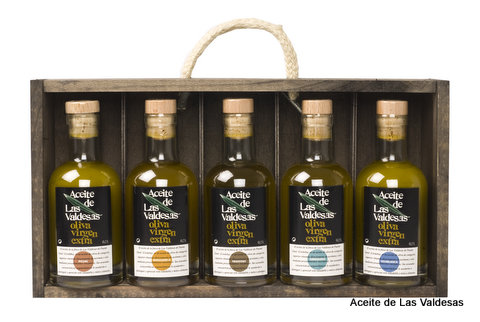
Another growing trend is the creation of blends of single-variety olive oils. These are carefully controlled mixtures of different oils in specific proportions, created to obtain new aromas and flavours and to enhance particular characteristics. For example, an oil with a particular flavour profile may be blended with another variety that has a higher concentration of antioxidants.
In reality, the variety itself does not determine the quality of olive oil. Single-variety olive oils can be Extra Virgin or lower-quality olive oils, depending on factors such as the quality of the olives and how they are harvested, handled and processed at the mill.
Another matter is taste. It is possible to produce Extra Virgin Olive Oils (EVOO) from many different varieties, each with its own sensory characteristics. Some consumers prefer oils with a certain level of bitterness, which can be characteristic of some varieties or blends, while others do not enjoy bitter flavours at all. Fruity notes also vary between varieties and can be particularly appreciated in Extra Virgin Olive Oils. Depending on the variety, you may find notes reminiscent of tomato, almond, artichoke, banana and many other aromas and flavours.
Read moreThe main ingredients in baking are usually some type of fat and sugar.
The fats traditionally used in baking have been lard, butter and, more recently, margarine. The first two are of animal origin and therefore contain significant amounts of saturated fat. Margarine is plant-based, but it is processed and some types may contain trans fats, which have been associated with negative effects on health.
In conclusion, the traditional fats used in baking are not necessarily the healthiest options.
However, whether due to healthier eating habits or the significant improvement in the overall quality of olive oils in recent years, the use of olive oil in baking has been steadily increasing.
Here are some tips to help you successfully replace butter with olive oil:
Some Extra Virgin Olive Oil producers produce unfiltered olive oil. Here, we will explain the differences between filtered and unfiltered olive oil, and why we produce unfiltered olive oil.
The difference between filtered and unfiltered olive oil is that unfiltered olive oil contains some solids in suspension and small amounts of water from the olive fruit.
For this reason, unfiltered olive oil have a cloudy appearance, while filtered olive oil is more translucent and bright.
From an organoleptic point of view, we have heard many different opinions: some people find that unfiltered olive oil has a more intense flavour, while others believe that aromas can be detected more clearly in filtered olive oils. These are just some of the opinions expressed by recognised experts in our sector.
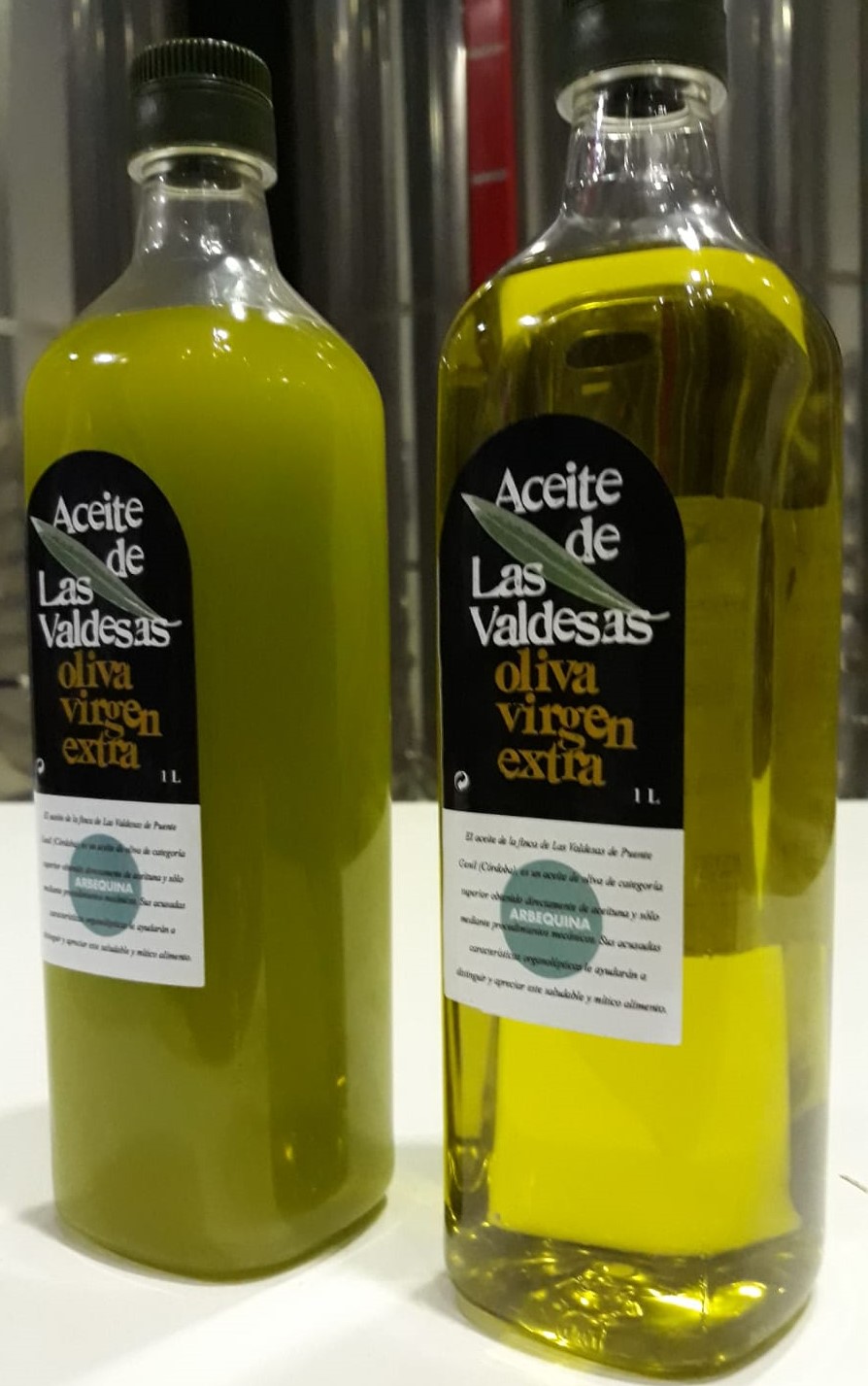
Our own experience, after carrying out several tastings, is that the differences in aroma and flavour after proper filtration are not significant. You can form your own opinion by filtering unfiltered olive oil at home. Simply use a coffee filter. You will see that the resulting olive oil is considerably more translucent. Obviously, industrial filters are different, but this homemade experiment provides a good approximation.
One of the advantages of unfiltered olive oil, with its cloudy appearance, is that it gives the consumer an indication that the oil is fresh and was produced during the most recent harvest. This is because unfiltered olive oil naturally settles in storage tanks, as explained here. This process takes between 4 and 10 months. There is no exact period, as it depends on factors such as temperature and olive variety. Once the sedimentation process is complete, unfiltered olive oil has a similar appearance to filtered olive oil.
Another interesting feature of unfiltered olive oil is that it can retain additional polyphenols in the small amounts of water that have not been removed. Polyphenols are compounds with significant antioxidant activity and are therefore considered desirable components of the diet.
There are two main types of polyphenols in olives: non-polar polyphenols, which are dissolved in the fatty phase, and polar polyphenols, which are found in the vegetable water. During the olive oil production process, non-polar polyphenols remain in the olive oil, while polar polyphenols are removed with the water. Therefore, unfiltered olive oils, which contain small amounts of water, can contain both polar and non-polar polyphenols.
However, not everything is an advantage when it comes to unfiltered olive oil. In addition to its less attractive appearance compared with filtered olive oil, another disadvantage is its storage life. It is therefore recommended that unfiltered olive oil be consumed during the same year, because the suspended solids gradually settle in the container. Over time, these solid particles may impart undesirable aromas to the olive oil. This does not mean that the oil becomes harmful to health. For this reason, we recommend consuming unfiltered olive oil as fresh as possible and preferably within 12 months of bottling.
At Las Valdesas, we produce both filtered and unfiltered olive oils, although they are not usually available throughout the entire year.
During the olive oil production season, approximately between October and December, all our varieties are available as unfiltered olive oil, although some may not yet be available in filtered form.
Between January and May, we are most likely to have both filtered and unfiltered olive oils available, depending on the variety.
During the summer months and September, we mainly have filtered olive oils available.
You can check on the page for each packaging format which varieties are available in filtered and unfiltered versions (for example, the 2.5-litre can).
If you are interested in a variety that is not currently available in the type you want (filtered or unfiltered), you can leave us your email address and we will notify you when it becomes available.
Read more
It is well known that olive oil is one of the pillars of the Mediterranean diet, recognised by nutritionists worldwide, but where does our knowledge of this emblematic product come from? When we stand in front of a supermarket shelf and see Virgin Olive Oil and Extra Virgin Olive Oil, do we know how one differs from the other? We will try to clarify this below.
Both are pure olive juice extracted using mechanical procedures, usually through centrifugation, since traditional pressing is now practically obsolete. In no case are they subjected to refining. The juice obtained directly from the olive through the aforementioned process is called Virgin Olive Oil, which, depending on its quality, is ultimately classified as either “Virgin Olive Oil” or “Extra Virgin Olive Oil”.
Extra Virgin Olive Oil is the highest-quality category among Virgin Olive Oils. Its acidity level must not exceed 0.8, while Virgin Olive Oil has a higher acidity level than Extra Virgin Olive Oil, but it must still be less than or equal to 2. This chemical criterion is the first that differentiates these types of olive oil.
The second differentiating criterion is purely organoleptic. Through tasting, in which flavours and aromas are analysed, an attempt is made to detect possible defects. Extra Virgin Olive Oil has no defects: the result obtained through the tasting panel must be zero, and the median of the fruity attribute must be greater than zero. In contrast, in Virgin Olive Oil, the median of the defects detected during tasting (panel test) should be less than or equal to 2.5, and the median of the fruity attribute must be greater than zero. Thus, we can see that while Extra Virgin Olive Oil is perfect and free from defects, Virgin Olive Oil may have some.
In summary:
Extra Virgin Olive Oil: Its chemical acidity level is less than 0.8, and it has no organoleptic defects whatsoever. The oil must meet both parameters to be classified as Extra Virgin. It is undoubtedly the best-quality olive oil because its nutritional properties remain intact.
Virgin Olive Oil: Its chemical acidity level must be less than or equal to 2, and the median of the defects detected by the tasting panel must be less than or equal to 2.5. If these parameters are met, the oil is classified as Virgin Olive Oil.
Aside from the technical criteria, we could ask:
To answer that question, we have to go back to the origin:
Any irregularity, malpractice or oversight in any of the processes discussed will make the difference between a truly perfect Extra Virgin Olive Oil and a Virgin Olive Oil.
The effort and dedication involved in the daily care of the olive groves on the farm, the strict supervision and application of the highest quality standards during production at the mill, and finally, the use of the appropriate techniques and technology to preserve the oil in the storage facilities once it has been produced, will result in a genuine Extra Virgin Olive Oil: a perfect product for you to enjoy at the table that can provide you with numerous health benefits.
At Las Valdesas, we offer Extra Virgin Olive Oils of exceptional quality at an unbeatable price. Would you like to try them? Click here to visit our online shop.
Read moreSometimes, after receiving phone calls from customers, we are asked whether we have a mild extra virgin olive oil. In most cases, they are looking for an extra virgin olive oil with a neither bitter nor pungent taste, or simply one without any pungent notes (some customers say they want an oil that "does not grip the throat").
With the characteristics described above, the commercial category that usually meets these requirements is mild olive oil (formerly known as 0.4º), which is a mixture of refined olive oil, which has very little flavour, and a percentage (approximately 10%) of Virgin or Extra Virgin Olive Oil to give it a slight touch of flavour. However, it is not Extra Virgin Olive Oil; it is a blend, so the health benefits associated with Extra Virgin Olive Oil are diluted.
There is another solution.
There are some varieties of olives that naturally produce Extra Virgin Olive Oil with a mild flavour. Varieties such as Arbequina, Picudo and Royal, for example, can produce a very mild olive oil that is gentle on the palate and has no bitter notes.
Both Royal, from the Cazorla area in Jaén, and Picudo, from Córdoba, are olive oils with very limited production. They can be difficult to find and are therefore very expensive. However, Arbequina is much more widely available and usually has a more affordable price.
Although these are mild-flavoured varieties, they are not recommended for consumption at the beginning of the harvest season, when the olives are still very green, as they will not be as mild as you might expect. We also recommend choosing filtered versions.
We recommend using extra-mild Extra Virgin Olive Oils for children, particularly at breakfast and as a snack. We also recommend them for baking, as a substitute for butter, and for making mayonnaise instead of using sunflower oil, although the result may not appeal to everyone.
At Las Valdesas, we produce Arbequina Extra Virgin Olive Oil, among other varieties, which has a mild flavour. You can see our packaging options and prices in our online shop.
Read more
The bitterness of olive oil is a fairly controversial topic in the world of olive oil, among producers, tasters and consumers alike.
According to tasters, bitterness is a positive attribute of Extra Virgin Olive Oil, as long as it is balanced with the other positive attributes, such as fruity notes and pungency.
Opinions among consumers are mixed. Some people love bitter Extra Virgin Olive Oils, while others do not appreciate them at all.
Most olive varieties produce oils that are bitter to a greater or lesser extent.
The compounds responsible for giving olive oil its bitter taste are natural compounds called polyphenols. Among them, oleuropein stands out as one of the most abundant polyphenols in olives and is one of the compounds responsible for the bitter taste.
Therefore, the higher the concentration of oleuropein, the more bitter the oil will tend to be.
At the same time, oleuropein is a powerful antioxidant, which contributes to the stability of olive oil at high temperatures and over time. Likewise, bitter oils, which have a higher concentration of polyphenols, are generally considered to have greater health benefits (see health benefits of olive oil).
Since the bitterness of Extra Virgin Olive Oil is influenced by its concentration of oleuropein, oils with higher levels of this compound tend to be more bitter.
The amount of oleuropein in olive oil depends on several factors:
Among Spanish olive varieties, those known for producing oils with greater bitterness due to their high concentration of polyphenols and antioxidants include Picual, Cornicabra and Manzanilla Sevillana.
Picual: A variety originating in Jaén, where it is widely cultivated, as well as in other provinces such as Granada, Córdoba and Ciudad Real.
Cornicabra: A variety originating in Toledo, where it is widely cultivated, as well as in areas of Ciudad Real, Cáceres, Madrid and Badajoz.
Manzanilla Sevillana: A variety originating in Seville. It is mainly used as a table olive, although it is also used for oil production.
At Las Valdesas, we produce Picual and Manzanilla olive oils. They are available in our online store.
If you want to experience their full intensity, we recommend trying them when they are freshly produced. You can leave us your email further down the page under "Notice about new crop oils".
Read more
Extra virgin olive oil (EVOO) is a widely consumed food product that can be easily purchased in stores and shops, at least in Spain.
Below, we are going to show you some differences depending on the type of shop where you can buy it.
Most extra virgin olive oil is purchased in these types of establishments. From our point of view, it is not the best place to buy it for several reasons:
First, almost all large supermarkets tend to use olive oil and milk as promotional products because they know that the lack of these two essential commodities would force families to make a purchase.
Therefore, they advertise large discounts on these basic products so that families make their weekly or monthly purchase in their supermarkets. In this way, they compensate for the discounts on olive oil and milk with the rest of the products.
For this reason, they tend to put as much pressure as possible on olive oil and milk producers. In turn, the olive oil producer or supplier, faced with the small margin offered by the supermarket, produces a limited-quality extra virgin olive oil, simply to comply with legislation and remain economically viable. (See the requirements that an extra virgin olive oil must meet).
Secondly, large supermarkets do not usually take proper care of olive oil storage conditions. A transparent PET bottle can remain for many weeks in the aisles of a hypermarket under fluorescent lighting, which seriously damages the olive oil.
These two circumstances are, in our opinion, the reasons behind the results of the OCU (consumer organisation) report, which showed that many olive oils labelled as extra virgin were not actually extra virgin.
These are usually a good option for tasting high-quality and different Extra Virgin Olive Oils, varieties and protected designations of origin. In Spain, there are many companies trying to produce high-quality EVOO.
Some of them only offer small-format bottles, so if you are looking for an extra virgin olive oil for everyday use in the kitchen, they may not meet this need.
As a disadvantage, prices tend to be higher.
This involves buying extra virgin olive oil directly from cooperatives or mills where the olive oil is produced. Normally, olive oil is purchased in five- or two-litre formats. The quality of these EVOOs tends to be higher than that offered in hypermarkets or supermarkets.
Of course, in this case, prices tend to be higher than those in supermarkets or hypermarkets, whether they are on offer or not. This can surprise customers who are not used to buying from cooperatives and do not understand that buying directly from a cooperative can sometimes be more expensive.
The convenience of purchasing from cooperatives is mainly limited to the production areas where they are located.
Recently, many small and medium-sized mills have been built on private olive farms. The main intention of their owners is to produce high-quality extra virgin olive oils, package and sell them as premium products at higher prices. Therefore, many of the most awarded extra virgin olive oils are usually associated with a particular estate.
However, many of these mills have not yet developed their own sales networks or marketing strategies, or their activity is simply focused on producing extra virgin olive oils to later sell them to other well-known producers who use these olive oils to improve their own blends.
Here, we believe that customers can obtain a high-quality extra virgin olive oil at a reasonable price.
The problem for consumers is how and where to find these mills. The Internet and new technologies are playing an important role in this matter.
These are the Oleotecas and speciality stores that sell olive oil using online tools and the Internet. They are very convenient for buying extra virgin olive oils from different origins and varieties. Their prices are usually lower than those of traditional shops, and most of them offer extra virgin olive oils in family-size formats.
Many producers and cooperatives sell their own extra virgin olive oils through the Internet. From our point of view, unless you live near a mill, it is the best way to buy olive oil. Even more so if it is a private mill that produces olive oil from olives harvested in its own olive groves.
There are many online shops where you can buy olive oil and extra virgin olive oil.
Below, we suggest some guidelines to help you choose the most interesting ones.
Read more